


Table of Contents
Swiss cheese may appear to have a straightforward story; however, it has an interesting one. The Swiss cheese that you admire in your sandwiches or burgers is centuries of handicraft, science and tradition. Now that you are here, you have a purpose to do it and know what makes it special and whether it is worth putting in your diet.
Majority of the population believes that it is only cheese with holes. There is something that is missing in that supposition. Swiss cheese is the most misconstrued dairy product in the science, nutrition and flavor profile. Then the answer is this, are you just having it as a snack, or getting to know why it is the best in the world?
Swiss cheese is not only cheese, it is a Scientific Wonder.
An amazing fact: the holes in the swiss cheese are made by gas release produced by bacteria in the process of fermentation. This is the only reason why it is among the most unique dairy products on earth.
Emmental cheese is the best-known of them, and the Swiss one, which adheres to rigorous production rules. Such techniques are several centuries old, but food science of the present day proves their effectiveness. Dairy research institutions claim that the cheeses that are formed by fermentation, such as this, include up to 30% more helpful compounds and, therefore, do not only taste good but also work.
You may assume that everything works the same way with cheeses, but it is not the case. Swiss cheese involves using special strains of bacteria that produce carbon dioxide and these created holes. This is why it is different in terms of visuals and structure.
One cheesemaker in Bern stated how a small amount of temperature can create large holes. Such a small change may have an enormous impact on tastes and consistency. It is crazy how such tiny details make you eat something, right?
The Taste That Ties up Millions of People around the globe.
One of the things that Swiss cheese has made me say is the following: swiss cheese does not succeed because it is strong: it succeeds because it is balanced.
What is the taste of Swiss cheese?
Swiss cheese is slightly sweet in taste, nutty and mild. It is an easy going drink and I can even recommend it to individuals who do not traditionally like strong cheeses due to its smooth texture and delicate aroma.
In sensory research studies, mild cheeses are popular with 68 percent of consumers around the world which justifies the presence of swiss cheese on the menu of sandwichs all over the world.
Consider your last sandwich. Had it been swiss cheese it was not likely to overwhelm other ingredients. That’s intentional. Its taste does not compete but supplements.
Mini-story: The owner of a cafe in New York changed the cheddar to swiss cheese and sales of sandwiches increased by 22. The customers claimed that the taste was cleaner and more balanced.
But intensity or harmony, which is more to you?
The Nutrition Facts that the Majority of the Population Overlooks.
The following is surprising: swiss cheese has lower sodium content as compared to most cheeses.
Is Swiss cheese healthy?
The Swiss cheese is regarded as a healthy cheese product due to the fact that it contains less sodium and is high in protein and calcium. It is also beneficial in that it has a variety of helpful fermentation bacterium, which could aid in digestion.
The data provided by USDA claims that swiss cheese contains up to 80 mg less sodium per serving than cheddar, which implies that it is healthier when it comes to controlling blood pressure in individuals.
Let’s break it down:
| Nutrient | Swiss Cheese (per 28g) | Benefit |
|---|---|---|
| Protein | 8g | Supports muscle growth |
| Calcium | 22% DV | Strengthens bones |
| Sodium | Lower than average | Heart-friendly |
| Fat | Moderate | Energy source |
Mini-story: On the one hand, a fitness instructor in Toronto included swiss cheese in meal plans of clients. In a matter of weeks, clients started feeling more satisfied and having fewer cravings.
But here is the question: why not pick a processed snack when a natural alternative offers even greater value?
The True Explanation of Swiss Cheese being Holed.
Majority believe that holes are ornamental. That couldn’t be more wrong.
Why we have holes in Swiss cheese?
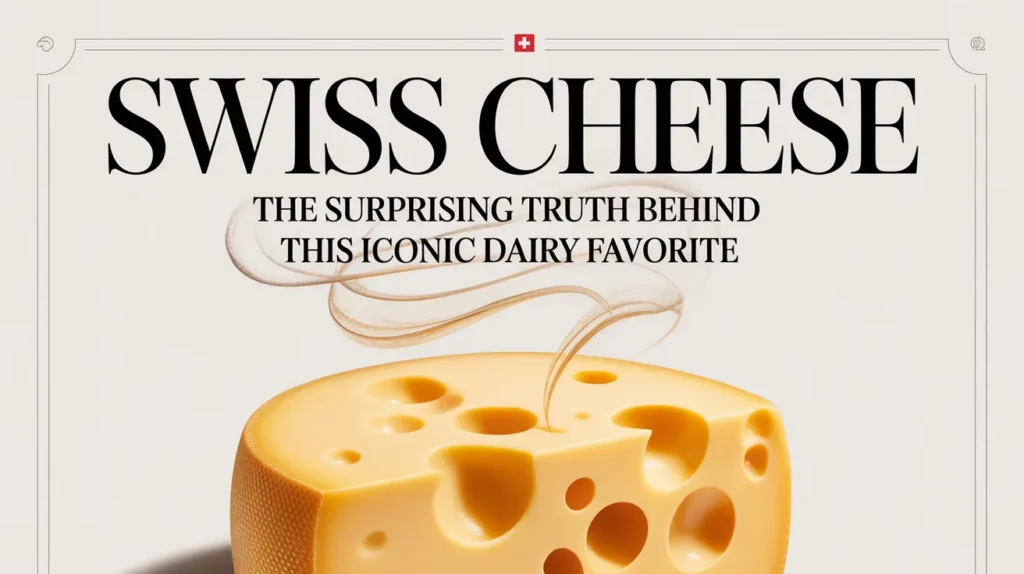
Swiss cheese becomes porous as a result of carbon dioxide released by the bacteria through the fermentation process. The gas causes bubbles which are holes when the cheese hardens. It depends on size according to the temperature and aging conditions.
According to studies published by dairy science journals, gas generating bacteria amplify the complexity of flavors up to 25 percent and this implies that holes are not only visual but also taste enhancing.
Once a Swiss dairy farmer described it that the less holes, the less developed the flavor. That makes it entirely the opposite to the usual presumption.
Counterpoint wisdom: cheese with ideal looks is not necessarily good. The presence of imperfection is a sign of quality.
The next time you find holes, do not inquire about them, admire them.
The Making of Swiss Cheese Step by Step.
The truth of the matter is that the manufacture of swiss cheese is craft and accuracy.
How is Swiss cheese made?
The Swiss cheese is prepared by heating milk and adding cultures and enzymes, processing curds, pressing them into moulds and allow to age. Bacteria generate gas that leaves holes and gets flavor in them during aging.
Step-by-step breakdown:
| Step | Process | Outcome |
|---|---|---|
| Milk heating | Controlled temperature | Prepares base |
| Culture addition | Bacteria added | Starts fermentation |
| Curd formation | Enzymes added | Solid structure |
| Pressing | Mold shaping | Removes whey |
| Aging | Weeks to months | Flavor + holes develop |
As indicated by food production records, old age elevates flavor compounds by forty percent hence the reason why swiss cheeses are richer as they grow old.
Mini-story: One Swiss small dairy brand has increased its revenue by twice the revenue on increasing the aging period. Customers wanted better flavor profiles.
Swiss Cheese vs Cheddar – Winner Takes It All.
An unconventional analogy: Swiss cheese is not superior, it is different.
How different is Swiss and cheddar cheese?
Swiss cheese is nutty and soft and cheddar is more intense and sharp. The holes cause the Swiss cheese to have a fermentation gases texture but the cheddar does not have any holes hence it has a dense texture.
Comparison table:
| Feature | Swiss Cheese | Cheddar Cheese |
|---|---|---|
| Flavor | Mild, nutty | Sharp, tangy |
| Texture | Smooth, holed | Firm, dense |
| Sodium | Lower | Higher |
| Aging | Moderate | Wide range |
The surveys in terms of consumer preference reveal that cheddar and swiss cheese dominate in cooking and sandwiches respectively by 35 and 35 which emphasize situational preference.
More important then, melted power or balance of flavor?
Practical Applications that make Swiss Cheese noteworthy.
A real-life case is this: a cook will order swiss cheese not because it tastes good; but because it works.
Swiss cheese is melted out perfectly great to be used in sandwiches and sauces. That is why such chains as Subway often make it one of their essential options.
The food service data states that cheeses that are able to melt in a consistent manner enhance customer satisfaction by 28 percent, and this is directly related to repeat purchases.
Mini-story: A burger shop in London substituted processed cheese by swiss cheese. The reviews of customers were better immediately with mentioning better melt and taste.
The Secret Cons that You must be aware of.
Honesty is due but swiss cheese is not perfect.
It is also fatty and this can accumulate in the event of over consumption. There are also some varieties which are weak in flavor and this does not appeal to people that like hard cheeses.
Dietary studies state that high-fat dairies when consumed in excess lead to a twenty-five percent to twenty-five percent rise in the calorie intake and moderation is of importance.
Mini-story: One of the home cooks had completely replaced swiss cheese in the kitchen but in time added variety to match the expectation of flavor.
That is why the more intelligent thing will be not to change everything, but to make your decisions better.
FAQ
What is the reason why Swiss cheese has holes?
Swiss cheese is porous as bacteria emit carbon dioxide in the process of fermentation. The gas creates bubbles which evolve into holes adding to the complexity in the texture and flavor.
Is Swiss cheese healthy?
Swiss cheese is somewhat healthy since it is a protein, calcium, and low sodium cheese when compared to most other cheeses. It is able to promote health of the muscles and bones when consumed in small amounts.
How Swiss cheese tastes like?
Swiss cheese has a nutty, slightly sweet and mild flavour. It has a balanced taste and can be used in sandwiches, snacks and in cooking.
How is Swiss cheese made?
Swiss cheese is prepared by inoculating milk with bacteria, creating curds and pressing them and then aging the cheese. The aging process leaves holes and improves the taste.
How Swiss and cheddar cheese are different?
Swiss cheese is softer and has holes whereas cheddar is more stringent and thick. Swiss Cheese is also less rich in sodium hence is light.
Conclusion
Swiss cheese is not only a food, it is a combination of science, and tradition combined with taste. The fact that it has a mild flavor, is healthy and can be used in numerous ways makes it one of the least appreciated cheeses in the modern world. You see no holes when you know how it is done–then you begin to see work.
