


Table of Contents
Rubbish heaps are increasing at a rate that surpasses the conventional recycling mechanisms. Landfills are increased, the rates of contamination of land and useful materials are lost in mixed garbage flows. Matarecycler is a solution to such an issue, which involves the use of artificial intelligence, sensors, and data analytics to re-invent the recycling process.
Individuals who are trying to find out more about matarecycler tend to get only one thing that is the clear understanding of what matarecycler is, how it operates and why it is important to the future of sustainability. Others would also like to find out whether this technology effectively enhances the recycling process or it is just a buzzword in the name of the environment.
Things are much more interesting in reality.
Matarecycler is a recently developed type of smart recycling system that is expected to lessen the amount of waste pollution and enhance the recovery of the material, as well as contribute to the cyclical economy. It can change the manual way waste management is handled by incorporating AI-enabled sorting systems, IoT-enabled bins, and real-time analytics to turn it into a smart, automated ecosystem.
A look at how this system works and why cities and businesses are implementing it offers a clue to what recycling might be about in the future.
What Is MataRecycler?
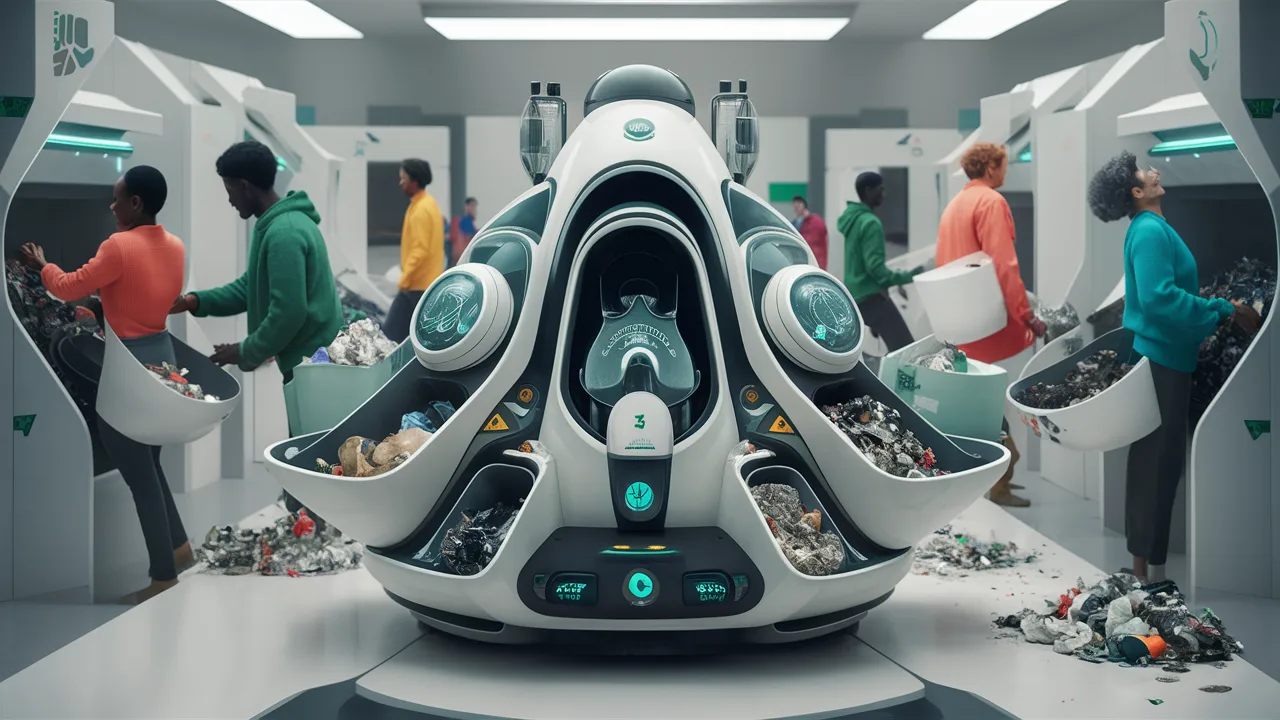
Matarecycler is an intelligent recycling machine which involves artificial intelligence, sensors and data analytics to automatically identify, sort, and recycle recyclable materials.
This AI waste management system is unlike the manual sorting used in the traditional recycling method since it uses a scan to identify the type of material and matches the material with the appropriate recycling stream.
The solution makes recycling a digital waste management environment in which data, automation, and sustainability collaborate.
The major roles of a matarecycler system.
- Camera-based and sensor-based material recognition.
- Plastic, metal, paper, and glass sorting are done using automation.
- Smart Real-time monitored bins.
- Waste analytics dashboards on the cloud.
- Recycling of tracking of participation.
The outcome is a system of recycles that is automated and can be used to increase the rate of recycling and minimize the level of contamination and operation costs.
The Reason why Traditional Recycling Systems Fail.
It is a good idea to examine the shortcomings of the traditional recycling systems before knowing why mata recycler technology is important.
The majority of the present recycling centers have a number of structural issues.
1. High contamination rates
Once the non-recyclable goods find their way into the recycling processes, complete batches could be lost. Contamination in some facilities has a level of more than 20%.
2. Inefficiency in manual sorting.
Human sorting is slow and is likely to have errors particularly when materials resemble each other.
3. Lack of involvement in recycling.
Some of them are merely ignorant of what is to be put into a recycling bin.
4. Poor logistics of collection.
Garbage trucks usually work according to a set route and not according to the waste levels.
The problems make the even well-intended recycling initiatives even more ineffective.
And that is where the higher order recycling technology like matarecycler comes in to transform the system.
How Does MataRecycler Work?
To determine the mechanism of how does matarecycler works, it is necessary to analyze its technological ecosystem.
The platform normally incorporates three main elements.
1. Intelligent collection infrastructure.
The smart bins are used on the first level where the sensor on the bins identifies the waste deposited.
These bins can:
- Reference materials immediately.
- Measure fill levels
- Detect contamination
- Send alerts when full
This is the basis of intelligent waste management system.
2. Artificial intelligence based sorting.
When waste is taken through the processing centers, AI recycling technology scans the materials through computer vision and machine learning.
The system evaluates:
- Color
- Density
- Shape
- Texture
- Material composition
Also in seconds, intelligent waste sorting machines can serve to sort recyclable resources with much more precision than by hand.
3. Data analytics and monitoring.
Any transaction within the recycling technology platform creates data.
Operators can monitor:
- Waste composition
- Recycling accuracy
- Collection frequency
- Contamination levels
This changes the recycling as a guesswork to a performance management.
Principles of Technologies of MataRecycler.
Matarecycler has a true strength in the form of technological integration.
This recycling solution is environmentally friendly and is powered by several innovations.
Artificial Intelligence
Machine learning systems reduce the waste image to identify the materials.
In the long run, the system becomes better with having more data.
Internet of Things (IoT)
The IoT sensors installed in bins monitor:
- Waste volume
- Temperature
- Contamination
- Collection schedules
- Robotics
Robotic arms, which are able to pick and sort waste products moving on the conveyor belts are incorporated in advanced facilities.
Cloud Data Systems
The centralized platforms is where recycling data of cities, businesses and facilities is analyzed.
These technologies, combined, are a sustainable recycling platform that is meant to be expanded all over the world.
Classical Recycling and MataRecycler.
The variations between the standard recycling operations and a high-technology recycling can be better explained by contrasting the main operations measures.
| Feature | Traditional Recycling | MataRecycler System |
|---|---|---|
| Sorting Method | Manual sorting | AI-driven sorting |
| Contamination Control | Limited | High accuracy detection |
| Data Tracking | Minimal | Real-time analytics |
| Collection Efficiency | Fixed schedules | Sensor-based collection |
| Material Recovery | Moderate | High recovery rates |
| Scalability | Limited | Highly scalable |
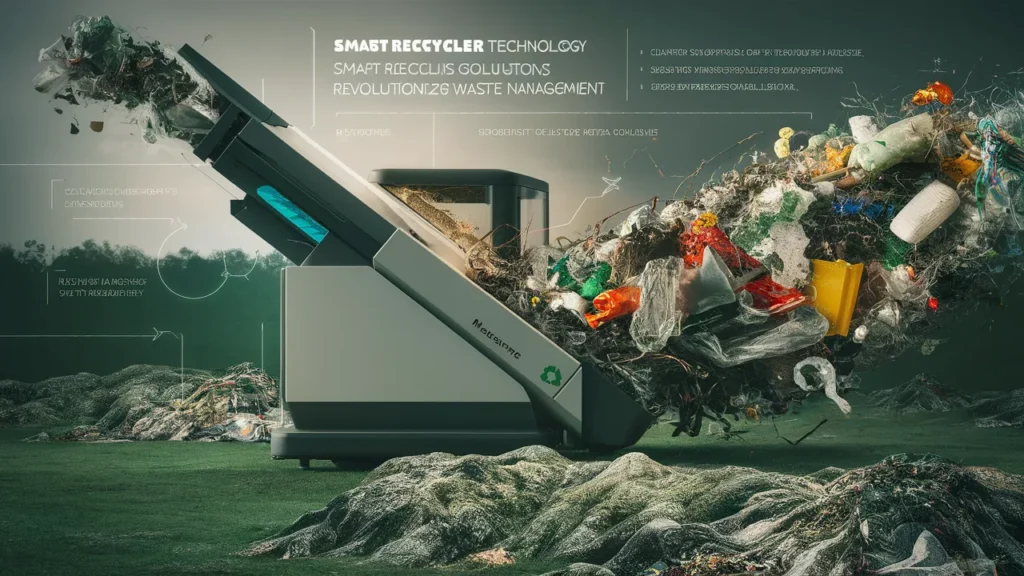
This analogy explains the reason cities and companies are considering automated recycling plants through AI.
Major Characteristics of the MataRecycler Platform.
Matarecycler has several capabilities that render it superior to other recycling technologies that are older.
AI material recognition
The system captures recyclable materials with great precision using cameras and machine learning.
Real-time bin monitoring
IoT sensors monitor the fullness of bins and signal collection services.
Gamified recycling apps
Most of the deployments have mobile applications that will give users a reward when they recycle in an appropriate way.
Waste analytics dashboards
Organizations get in-depth information concerning recycling habits and waste structure.
Community engagement tools
The site may also have educational content about the recycling of the circular economy.
Applicability of MataRecycler Technology in the Real World.
There are cities and organizations that use AI technology of recycling which report improvements that are measurable.
| Year | Development | Result |
|---|---|---|
| 2015 | Early sensor-based recycling bins | Basic waste monitoring |
| 2018 | AI material recognition introduced | Improved sorting accuracy |
| 2020 | IoT-connected waste networks | Smarter collection routes |
| 2023 | Robotics integrated into recycling plants | Automated sorting |
| 2025 | Matarecycler-style integrated systems | End-to-end smart recycling |
These advances explain why digital sustainability solutions are taking centre stage in contemporary waste management processes.
The purpose of MataRecycler to the Circular Economy.
A cyclical economy system of recycling tries to ensure that materials remain in use as much as possible.
There is a reuse, repair or recycling of materials as opposed to the old model of take- make-dispose.
Matarecycler technology facilitates this change.
It enhances the accuracy of sorting and the efficiency of recycling so that valuable materials are reintroduced into manufacturing supply systems and not landfills.
This leads to:
- Less exploitation of resources.
- Lower carbon emissions
- More sustainable manufacturing.
Simply put, the smart recycling technology reinforces the whole circle economy.
Smart Recycling Innovation Timeline.
The developmental history of AI waste management systems has been experienced in the last ten years.
| Year | Development | Result |
|---|---|---|
| 2015 | Early sensor-based recycling bins | Basic waste monitoring |
| 2018 | AI material recognition introduced | Improved sorting accuracy |
| 2020 | IoT-connected waste networks | Smarter collection routes |
| 2023 | Robotics integrated into recycling plants | Automated sorting |
| 2025 | Matarecycler-style integrated systems | End-to-end smart recycling |
.
This schedule indicates how modern recycling technology evolved to become more than single-purpose instruments and full-scale digital environments.
The most frequent errors during the implementation of smart recycle systems.
Mighty engines such as matarecycler must be deployed also.
Organizations tend to commit mistakes that are avoidable.
Poor public education
In case residents are unaware about recycling regulations, they will contaminate more.
Incomplete infrastructure
The installation of smart bins without the analytics software is restricting the potential of the system.
Ignoring data insights
Policy decisions should be based on waste analytics.
Lack of maintenance
The cameras and sensors of AI should also be cleaned and calibrated on a regular basis.
These problems would be avoided so that the automated recycling solution would run as planned.
Professional Information: The Future of Smart Recycling.
Recycling experts are beginning to think AI will form the heart of the recycling system.
This can be backed up by a number of new trends.
Waste management in the future.
The future systems will predict the amount of waste generated depending on the events, weather, and consumption patterns.
Self-sufficient recycling sites.
The human intervention in the sorting systems will be reduced to a minimum once robotic systems are adopted.
Tracking of materials in blockchain.
It is possible to monitor the recyclable materials used in disposal to reuse in order to be transparent.
Smart city integration
Recycling networks will be linked to larger urban systems of infrastructure.
Such innovations will increase the services of digital waste management systems such as matarecycler.
Frequently Asked Questions
What is matarecycler?
Matarecycler is an artificial intelligence-based recycling solution, which provides an automated sorting of waste based on sensors, machine learning, and data analytics.
How does matarecycler work?
It is a system with smart bins, AI sorting machines and analytics software to monitor waste streams and sort the material that can be recycled effectively.
What is the significance of matarecycler?
It is only after taking into account the issues in waste management globally that one can understand the importance of matarecycler. It minimizes pollution, enhances recycling, and promotes the use of resources in a sustainable manner.
Who is allowed to use matarecycler systems?
These systems can be deployed in cities, recycling plants, business enterprises, and schools and residential communities.
The steps to take to consider MataRecycler as an organization.
Any organization that is interested in AIs in managing waste should begin with a definite plan.
Key steps include:
- Conduct a waste audit
- Determine causes of contamination.
- Install intelligent collection infrastructure.
- Assimilate analytics dashboard.
- Train users on how to recycle.
- This incremental process will provide a gradual shift of a sustainable recycling platform.
The Future of Intelligent Recycling.
The rate of waste production in the world has been increasing annually.
The conventional recycling processes will never be able to match the demand.
Such technologies as matarecycler give a way out.
With AI recycling technology, IoT waste sensors, and automated recycling plants, the system will reduce recycling to a reactionary procedure and make it an intelligent and data-driven infrastructure.
Considering the progress that cities are making towards becoming sustainable, business organizations that have decided to limit the adverse impact on the environment, and communities that are looking to find more intelligent ways of managing their wastes, intelligent recycling systems are one of the most promising environmental innovations of the decade.
