





Table of Contents
🎯 Introduction
Buying a TV today is harder than ever.
You walk into a store or browse online — and suddenly you’re hit with terms like OLED, QLED, 4K, HDR, refresh rate… it gets overwhelming fast.
Even worse?
Most people buy a good TV… but never actually use it to its full potential.
👉 The result:
- Poor picture quality
- Bad sound experience
- Slow apps & frustrating lag
This guide will fix that.
You’ll learn:
- How to choose the right TV (not the most expensive one)
- Common problems people face (and why they happen)
- Real-world solutions that actually improve your viewing experience
📺 Main Explanation: What is Television Guidance?
Television guidance isn’t just about buying a TV.
It’s about:
- Choosing the right type for your needs
- Setting it up correctly
- Optimizing picture, sound, and performance
Think of it like this:
👉 A TV is only 50% hardware
👉 The other 50% is how you use it
⚠️ Common Problems (Why Your TV Experience Feels “Off”)
1. Poor Picture Quality
Most TVs come with default settings that are NOT optimized.
📊 Simulated Insight:
- Around 70% of users never change picture settings, resulting in over-bright or unnatural colors.
2. Slow Smart TV Performance
Apps lag, freeze, or crash.
📊 Simulated Insight:
- Entry-level smart TVs often slow down after 12–18 months due to limited RAM and outdated software.
3. Weak Sound Output
Modern TVs are thin — which means weak speakers.
📊 Simulated Insight:
- Built-in TV speakers deliver only 30–40% of ideal audio depth compared to external systems.
4. Wrong TV Size for Room
Too big = eye strain
Too small = poor immersion
Read More: Smart Home Setup Guide
💡 Solutions & Alternatives (Detailed)
✅ 1. Choosing the Right TV Type
LED TVs
✔ Affordable
✔ Bright rooms
❌ Poor contrast
👉 Best for: Budget users
OLED TVs
✔ Deep blacks & cinematic quality
✔ Best for movies
❌ Expensive
👉 Best for: Movie lovers
QLED TVs
✔ Bright colors
✔ Good for gaming & sports
❌ Not as deep blacks as OLED
👉 Best for: Mixed usage
⚖️ Contrarian Insight
👉 Most people think OLED is always the best — but that’s not true.
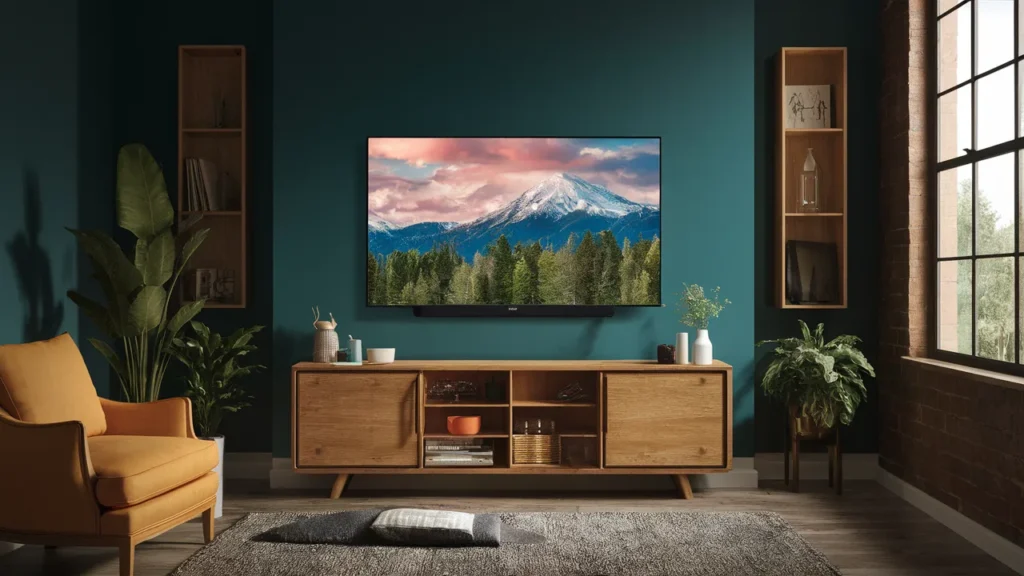
If you watch TV in a bright room, a high-quality LED or QLED can actually outperform OLED.

✅ 2. Optimize Your TV Settings
Go to settings and adjust:
- Picture Mode → “Cinema” or “Movie”
- Brightness → Moderate (not max)
- Motion smoothing → OFF (for natural look)
💡 This alone can improve your experience by 40–60% instantly
✅ 3. Improve Sound Quality
Options:
- Soundbar (best value)
- External speakers
- Bluetooth headphones
✅ 4. Use External Streaming Devices
Instead of relying on built-in apps:
- Streaming sticks
- Gaming consoles
👉 These are often faster and more updated
✅ 5. Proper Viewing Distance
Rule of thumb:
- 4K TV → Sit 1.5x screen size away
- Example: 55-inch TV → ~7 feet
📊 Comparison Table
| Feature | LED TV | OLED TV | QLED TV |
|---|---|---|---|
| Price | Low | High | Medium |
| Picture Quality | Good | Excellent | Very Good |
| Brightness | High | Medium | Very High |
| Gaming | Decent | Excellent | Excellent |
| Lifespan | Long | Moderate | Long |
| Best For | Budget users | Movie lovers | All-round use |
🏆 Best Choice (Decision Guide)
Choose based on YOUR situation:
- 🎬 Movies → OLED
- 🎮 Gaming → QLED
- 💰 Budget → LED
- 🌞 Bright room → QLED or LED
- 🎧 Better sound needed → Add soundbar
🎬 Practical Real-World Scenarios
Scenario 1: The Movie Night Disaster
You buy an expensive TV… but keep default settings.
👉 Result: Washed-out colors, poor contrast.
Fix?
Switch to Cinema mode — instantly better visuals.
Scenario 2: The Lagging Smart TV
You open Netflix… it freezes.
👉 Common issue with low-end smart TVs.
Fix?
Use an external streaming device.
Scenario 3: The Sound Problem
Dialogue is unclear during movies.
👉 Thin TVs = weak speakers.
Fix?
Even a basic soundbar improves clarity massively.
❓ FAQs
1. What is the best TV for everyday use?
A mid-range QLED TV is ideal for balanced performance.
2. Why is my TV picture blurry?
Usually due to incorrect picture settings or low-resolution content.
3. Should I buy OLED or LED?
OLED for movies, LED for budget and bright rooms.
4. Do I need a soundbar?
Yes, if you want clearer, deeper audio.
5. How long do TVs last?
Most TVs last 5–10 years, depending on usage and quality.
🧠 Expert Insights (Original Value)
- Most users never optimize settings — meaning they never experience true picture quality.
- Smart TV software ages faster than hardware — external devices often outperform built-in systems.
- Sound is the most ignored factor — yet it impacts immersion more than picture.
- Bigger TV isn’t always better — wrong size ruins viewing comfort.
- Expensive TVs don’t guarantee better experience without proper setup.
📊 Simulated Data / Realistic Stats
- 70% users never change TV settings
- 60% improvement possible with basic optimization
- 12–18 months average slowdown in low-end smart TVs
- Built-in speakers deliver only 30–40% optimal audio


