
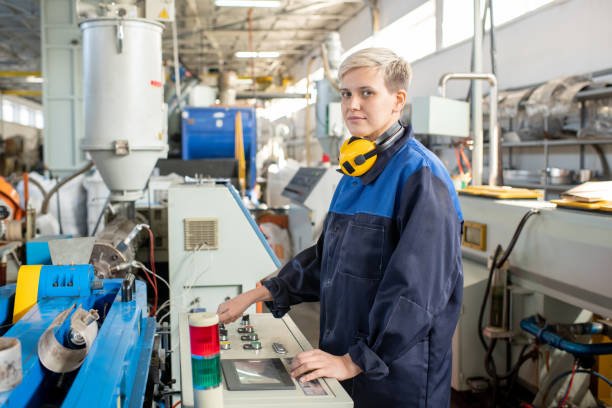
The plastic processing operator performs one indispensable duty in the manufacturing plants around the world. Starting with medical equipment, to car parts and packaging materials, almost all products made of plastic start with a skilled operator in charge of large machinery.
Whether you have ever wondered about the person turning raw pellets of polymer into a finished plastic product, this job is the case at the core of the process. The demand of competent operators is on the increase when industries increase their application of advanced plastics.
More recent reports in manufacturing workforce in 2025 indicate that there is rising demand of operators who would comprehend the automated production systems and the latest techniques of polymers processing. However, the fact of what the job is, is seldom given in most career guides.
This is a full guide that addresses that gap. You will know what plastic processing operators are, what employers are willing to hire, what skills are required, what the salary will be, what the career prospects are and how to make an entry into the field.
What Is a Plastic Processing Operator?
A plastic processing operator refers to a trained manufacturing specialist, whose duty is to operate machines that convert the raw materials of plastic into complete components or finished products.
These specialists usually have to deal with such equipment as:
- Injection molding machines
- Extrusion systems
- Blow molding machines
- Thermoforming equipment
- Plastic tools of cutting and finishing.
The essence of their service is to maintain the plastic molding process and the product is always consistent with every production cycle going smoothly.
A typical plastic machine operator will manage the settings of machines, feed raw materials in production systems, check quality of the product and make adjustments to equipment in case defects are noticed.
The majority of the facilities rely on operators to ensure that production is going on. Even slight changes in machines could bring significant changes in efficiency in output or quality of the products.
The reason why Plastic Processing Operators are needed in the current manufacturing.
Plastic components are found in nearly all the large-sized industries. Dashboards of automobiles, medical tubing, food wrappings, phone cases, building construction materials are some of the things that need skillful operators in the process of manufacturing.
There can be only one line of production, and thousands of units can be produced in an hour. Lack of a trained plastics manufacturing employee might result in a batch of spoiled wares in thousands of dollars.
The linkage between automated machine and human quality control is made through operators.
In manufacturing factories, a plastic manufacturing technician will be in control of a number of machines at the same time and make sure that materials move appropriately through the system.
By 2025, the speed of production has been enhanced in automation; however, human expertise is still important. The machines are yet to identify minor flaws in raw materials, finishes or even molding processes as well as the experienced operators can.
Plastic Processing Operator: Major Tasks.
The tasks of a daily plastic factory operator are a mixture of machine operating, overseeing the quality and fixing technical issues.
The main duties will be:
Machine Preparation and Check-out.
Machines are prepared by the operators prior to production. This involves controlling of temperature, pressure and molding cycles.
One little error in temperature would spoil batches of thermoplastic materials and accuracy in setting up is very important.
Raw Material Handling
The majority of plastic production starts with polymer in the form of a pellet or powder. In the production process, operators receive materials into hoppers and feed them appropriately.
A polymer processing technician should also be able to check the levels of moisture and the consistency of the materials.
Tracking the Production Cycles.
In manufacturing runs, the operators constantly monitor machine operation.
This includes checking:
- Machine temperature levels
- Cycle time efficiency
- Shapes and dimensions of the product.
- Vibrations or strange sounds of equipment.
- Quality Control Checks
One of the most essential activities that a molding machine operator should perform is maintenance of the quality.
Each production batch is sampled by operators to make sure that it meets manufacturing standards.
Troubleshooting Problems with a Machine.
In case of equipment failure or the development of defects, operators change settings or pause the line.
The knowledgeable users of the extrusion machines can easily and promptly recognize issues like clogged dies or uneven material flows.
Plastic Processing machines Operators are divided into types.
Various production plants employ special equipments based on the product that is being manufactured.
The most frequently used systems are:
Injection Molding Machines
These machines press the melted plastic into mold to form complicated shapes. The most common uses of this method to manufacture automotive components, medical equipment, and electronics housings.
An injection molding operator regulates temperature, injection pressure and cooling cycles to cause perfect molding.
Extrusion Machines
Extrusion refers to a continuous product made by pushing a melted plastic through a molded die like pipes, tubing or plastic sheet.
An operator of an extrusion machine maintains the continuity of the material flow and checks the thickness of the products.
Blow Molding Equipment
Blow molding involves making hollow containers made of plastic such as bottles. The mold is heated and filled by a machine with the hot plastic to achieve the shape.
Thermoforming Systems
Thermoforming applies heat to plastic sheets, puts them into vacuum-formed molds.
This is important to packaging industries.
Critical Competencies that every plastics operator should possess.
The profession of this sphere involves technical knowledge and experience with machines.
Skills in operating technical machines.
The operators should be familiar with the functioning of the manufacturing machines. Training often includes:
- Machine calibration
- Pressure control systems
- Temperature regulation
- Optimization of production cycle.
When the production variables vary, a competent operator of a plastics industry can shift the machine settings in a short time.
Mechanical Troubleshooting
Problems always occur with machines. Problems need to be diagnosed promptly to reduce downtimes by operators.
As an example, when the flow of the material within an extruder is slow, a knowledgeable operator of a plastics machine can know whether it is a problem of temperature, force, or die blockage.
Quality Inspection Skills
The operators are expected to identify flaws like:
- Warped shapes
- Incomplete molds
- Surface bubbles
- Structural weaknesses
This renders the importance of quality control in manufacturing.
Safety Awareness
The manufacturing facilities have hot conditions, moving machines and pressurized systems.
To avoid the injuries at the workplace, operators have got serious machine operation safety measures.
How to Be a Plastic Processing Operator in a Step-By-Step.
The field itself is quite easy to enter as opposed to several technical manufacturing professions.
Step 1: Basic Education.
The majority of employers demand high school diploma or its equivalent. Mathematics, physics and mechanical technology courses are really grounding.
Step 2: Study the Basics of manufacturing.
There are those workers who start as general industrial machine operators or assistants on production lines.
Workers can get familiarized with the workflow at factories through hands-on experience of a manufacturing production line.
Step 3: Accept On-the-Job Training.
There are a variety of training centers of new plastic manufacturing technicians.
This training covers:
- Machine operation
- Material handling
- Safety protocols
- Quality inspection processes.
Step 4: Specialisation in the types of machines.
The operators in the long-run specialize in plant like extrusion systems or injection moulding equipment.
A licensed injection molding operator usually receives superior salaries since he/she possesses specialized knowledge.
Step 5: gain Technical Certifications.
Sometimes employees are certified in polymer processing or plastics manufacturing technology in order to enhance work opportunities.
Job and Pay Prognosis of the Plastic Processing Operators.
The rate of income differs depending on the experience, location and machine specialization.
| Experience Level | Average Annual Salary |
|---|---|
| Entry Level | $32,000 – $40,000 |
| Mid-Level | $40,000 – $55,000 |
| Experienced Operator | $55,000 – $70,000 |
| Senior Technician / Supervisor | $70,000+ |
According to recent manufacturing employment reports, the plastics industry will keep growing in the next 2025 years and even later.
Automobile parts, packaging and medical equipment are various applications that require high performance plastics.
With more automation, technologically skilled operators are still needed.
Profits of Working as a Plastic Processing Operator.
High Job Availability
The industry has manufacturing plants almost in all the industrial areas. This generates a consistent demand of trained employees in plastics production.
Hands-On Technical Work
The job is usually satisfying to the workers who love working with machine and solving mechanical problems.
Career Development Prospects.
The operators have a progression ladder that is:
- Production supervisor
- Manufacturing technician
- Process engineer assistant
- Quality control specialist
Money to Make without a College Degree.
There are numerous qualified employees who make decent wages with no four-year degree.
The Job has Potential Challenges.
The job has challenges though it is advantageous.
Physical Work Environment
Machinery and heated plastic materials may make factories noisy and hot.
Shift Work
A large number of plants operate around the clock. Operators can work in the night or rotating shifts.
Precision Requirements
Minor machine errors would result in costly production errors.
But the skilled plastic factory workers get to know how to handle these issues well.
Widespread Errors Emerging Plastic Processing Operators make.
A novice is known to repeat mistakes in the initial training.
Neglecting Early machine warning signs.
Abnormal sounds or temperature changes tend to be the indicator of imminent mechanical problems.
Skilled operators react prior to the defects.
Failing to do Routine Maintenance Checks.
Preventive maintenance helps in avoiding costly machine downtimes.
Poor Quality Inspection
Their not checking sample products frequently may permit delivery of defefected batches to the customers.
A disciplined molding machine operator knows that regular checks are beneficial to the image of the company.
Niche Expert Insights Most Guides Skimp.
Experienced operators tend to get a strong intuitive understanding of the behavior of machines.
As an illustration, part-time extrusion machine operators are able to determine when there are anomalies in the material as they can see how the plastic moves out of the die.
The other superior skill is production parameter adjustment in the effort to minimize wastage without compromising on product strength.
Automated monitoring systems are also found in many modern facilities. The digital control interface knowledgeable operators enjoy a competitive advantage in the current market of the operator of the plastics industry.
People Also Ask (PAA)
So what is the job of a plastic processing operator?
A plastic processing operator is one who deals with machines that alter raw plastic materials into final products. They regulate machine settings, input materials, observe quality of production, and have solutions to equipment failure to sustain a smooth production process.
What will it take to be a plastic processing operator?
The main competencies are the ability to operate a machine, troubleshoot all sorts of mechanics, quality check, and safety awareness. The operators have to be knowledgeable of temperature control, pressure systems and plastic molding process that are applied in the industrial production.
What does the plastic processing operator make?
The payment differs based on experience and industry. The entry-level operators will usually be paid between 32,000 and 40,000 a year with experienced technicians earning up to 55,000 a year, though depending on their specialization in injection molding operator or extrusion technician.
Is plastic processing a good profession?
Yes. The production of plastics provides consistent jobs, high wages and career advancement. Most experienced plastic manufacturing technicians graduate to the supervisory or technical engineering job.
What is the way to be a plastic processing operator?
The majority of operators are high school graduates who are trained on the job. Employees also acquire experience in the use of machines, safety measures, and acquire skills in processing polymers, which are practiced in the current plants.
Concluding Remark: Is It a Good Idea To Be a Plastic Processing Operator?
Production is ever-changing in the form of automation, more sophisticated materials, and intelligent production processes. However, trained operators are still needed to ensure that the factories are running smoothly.
Becoming a plastic processing operator is a good and stable career where individuals who like working with machinery, solving problems, and working with hands would find the job rewarding.
Operators are required to operate advanced equipment, oversee a high level of quality and keep the production going in the facilities globally.
People who take time to acquire knowledge of the advanced equipment and methods of processing the polymer are on the right path to success in the plastics industry in the long term.
